Search This Blog

Thursday, April 3, 2014

function of chloride in sea salt

Key difference: Chlorine is a naturally occurring element with a symbol Cl and atomic number 17. Under standard conditions, the element is a yellow-green gas. Chloride is an ion of chlorine. Essentially, when atoms gain or lose electrons, they become ions. Chlorine atoms gain one electron to become a chloride ion (Cl−). An ion cannot remain in a free state, and has to combine with another element or elements to form a compound.
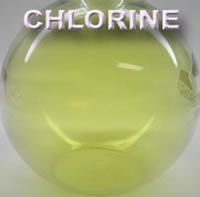
 

Chlorine is a naturally occurring element with a symbol Cl and atomic number 17. Under standard conditions, the element is a yellow-green gas. It has the highest electron affinity and the third highest electronegativity of all the elements. Hence, it is a strong oxidizing agent. Chlorine is found mainly in the earth’s crust. It makes up approximately 0.045% of the crust. However, chlorine is rarely found by itself and is usually a result of direct or indirect oxidation by oxygen.


Chlorine gas was first synthesized around 1630 but was not recognized as a fundamentally important substance. The characterization of the gas was made in 1774 by Carl Wilhelm Scheele who supposed it as an oxide of a new element. In 1810, Sir Humphry Davy and other chemists confirmed that the gas was a pure element. The name of the gas, ‘chlorine’ was derived from an Ancient Grrek word, ‘khlôros’ which means ‘pale green.’


The high oxidizing potential of elemental chlorine has lead to the chlorine’s uses for bleaching and disinfectant. Chlorine is also used as an essential reagent in the chemical industry.  Chlorine is also used in the manufacture of numerous consumer products, including production of plastics and other end products. As a disinfectant, chlorine is used to sanitize and disinfect water, especially in swimming pools. It also lowers the pH of water.


Chloride is an ion of chlorine. Essentially, when atoms gain or lose electrons, they become ions. Chlorine atoms gain one electron to become a chloride ion (Cl−). An ion cannot remain in a free state, and has to combine with another element or elements to form a compound. Even the chorine in the crust occurs as chloride in various ionic compounds, including table salt, i.e. sodium chloride (NaCl). These salts are often collectively called chlorides.


The chloride ion and its salts, such as sodium chloride, are very soluble in water. In fact, in sea water, the average concentration of chloride is 18.98%. It is the most abundant negative ion (anion) in the ocean. It constitutes nearly 90% of the anions found in sea water.


 Chloride is essential. It is required for all known species of life. However, only naturally occurring chloride is useful in the body. Artificially produced chlorinated organics may be inert or even toxic to the body. Chloride is used in the body for many different ends. It is located in all body fluids and is responsible for maintaining acid/base balance, transmitting nerve impulses and regulating fluid in and out of cells. It is also a key element in metabolism, which is the process of turning food into energy. The amount of chloride in the blood is carefully controlled by the kidneys.


Other than in the body, chloride also has other uses. Chlorides, i.e. salts formed with the chloride ion, are used to preserve food. The most commonly used chloride for this purpose is sodium chloride. Other salts such as calcium chloride, magnesium chloride, potassium chloride have varied uses. This includes applications in medical treatments to cement formation.


http://www.differencebetween.info/difference-between-chlorine-and-chloride

sea salt is rich in minerals

Sea salt is a potentially rich source of minerals.

Sea salt is a potentially rich source of minerals.

Sea salt and table salt have the same basic nutritional value, according to MayoClinic.com. Table salt comes from salt mines and goes through extensive processing that strips it of many minerals. In contrast, sea salt comes from evaporated sea water. As a result, the two types of salt differ in their components, taste and texture. The specific elements of sea salt vary slightly depending on the geographic area of origin, but its mineral profile is a strong marketing point. According to Western Analysis, Inc., sea salt can boast of as many as 75 minerals and trace elements.


Major Essential Macro-Minerals

Sodium and chloride are the most abundant ions in sea salt, representing about 33 and 50.9 percent of total minerals, respectively. They are both essential substances your body needs for normal function and nutrient absorption. Chloride specifically helps with muscle and nerve function. Sodium also acts in muscle function and helps regulate your blood volume and pressure. Potassium is another important macro-mineral that works with chloride to help regulate acid levels in your body. A quarter-teaspoon of Celtic sea salt contains 601.25 milligrams of chloride, 460 milligrams of sodium and 2.7 milligrams of potassium, according to CureZone.com.

Minor Essential Macro-Minerals

Calcium and magnesium play essential roles in several chemical reactions in your body. Magnesium, for example, intervenes in energy production and the synthesis of RNA and DNA. Calcium helps give structure to your bones and teeth, in addition to regulating your heartbeat and normal muscle and nerve function. Both are present in sea salt at the approximate concentrations of 1.5 milligrams and 5.2 milligrams per 1/4 teaspoon, respectively.

Major, Non-Essential Minerals

With about 9.7 milligrams per quarter-teaspoon of sea salt, sulfur is the third most common mineral in sea salt, says Western Analysis, Inc.. Even though it is not an essential mineral, sulfur plays an important role in your immune system and the detoxification of your body. Every cell in your body contains it, and it helps give structure to two amino acids. According to researcher Stephanie Seneff, Ph.D., sulfur is the eighth most common element in the human body and is important for normal metabolism and heart health.

Trace Elements

Sea salt can also contain numerous trace elements. These elements exist in minute concentrations but work with other minerals to maintain optimal function in your body. Trace minerals you may find in sea salt include phosphorus, bromine, boron, zinc, iron, manganese, copper and silicon. Your body uses some of these minerals, such as iron and zinc, to make enzymes involved in metabolism. Although phosphorus typically occurs in trace amounts in sea salt, it is actually an essential macro-mineral. Your body uses it as a structural component of bones, teeth and cell membranes, as well as for energy production.


About the Author

Suzanne Fantar has been writing online since 2009 as an outlet for her passion for fitness, nutrition and health. She enjoys researching and writing about health, but also takes interest in family issues, poetry, music, Christ, nature and learning. She holds a bachelor's degree in biological sciences from Goucher College and a MBA in healthcare management from the University of Baltimore.


http://healthyeating.sfgate.com/list-minerals-sea-salt-8907.html

sea salt does not have much zinc

The trace minerals in sea salts are just that… traces.

Sea Salt drying in AustraliaIf you go to google and look up “sea salt minerals”, you’ll find link after link of pages espousing the benefits of sea salt, how the mineral content of sea salt is greater than refined table salt and better healthy food choice. But is there any truth to it?

Without fail, sea salt tastes better than table salt.

And for that reason alone, it’s a fine choice to make. I only purchase sea salt, even though I don’t actually use much salt in my cooking. To me, table salt has a harsh, flat, too direct flavor.

As far as the nutritional content of table salt versus sea salt, sea salt does come out on top. But that doesn’t actually mean much to your health.

So let’s take a look at those minerals.

Americans consume too much sodium.I’ve chosen 5 common minerals which are all vital nutrients to examine: calcium, iron, magnesium, potassium and zinc. So how much is in sea salt relative to table salt and are the volumes enough for it to matter to your health?

As a base, I’ve listed the volumes of each nutrient you’d take in if you consumed the “tolerable upper intake level” of sodium per day, which is 2,300 mg/day, approximately the amount you’ll take in from one teaspoon of table salt per day.


CalciumTable Salt1Sea Salt2Men’s Daily Value3Women’s Daily Value3
 1.4 mg 10 mg 1,000 mg 1,000 mg

Calcium contributes towards network building in organisms, which means this element has the ability to aid muscle movements and skeletal structures. Additionally, calcium works to help efficient nerve transmission, hormonal balances as well as vascular contractions. – The Food Pyramid

Yes, as you can see, sea salt contains more than 7 times the calcium as table salt. However, since the Daily Value is 1,000 mg a day, neither version of salt is going to be an effective way to ensure you’re taking in enough calcium.

Try these food sources instead4:

  • Yogurt, plain, low fat, 8 ounces – 415 mg
  • Sardines, canned in oil, w/bones, 3 oz – 325 mg
  • Cheddar cheese, 1.5 ounces – 307 mg
  • Milk, whole (3.25% milk fat), 8 ounces – 276 mg


IronTable Salt1Sea Salt2Man’s Daily Value3Woman’s Daily Value3
 0 mg 0.2 mg8 mg18 mg

As a trace mineral in the body, iron provides the necessary transport means for moving oxygen throughout bodily systems fluidly. Additionally, it can aide in the repair and replication and differentiation of cells. – The Food Pyramid

Again, considering that table salt contains essentially no iron at all, even the meager 0.2 mg you’ll get from sea salt is an impovement. But it’s still only 1/40 the Daily Recommended Intake.

I actually read a blog where the writer cautioned against switching to sea salt because the iron content was high and some people have to be cautious with their iron intake. Really?? 0.2 mg out of 18 mg gives you pause? Just proof that the writer didn’t do her homework.

Try these food sources instead (non-heme iron)4:

  • Edamame, 1 cup – 8.8 mg
  • Lentils, boiled, 1 cup – 6.6 mg
  • Tofu, raw, firm, ½ cup – 3.4 mg
  • Spinach, fresh, boiled, drained, ½ cup – 3.2 mg


MagnesiumTable Salt1Sea Salt2Men’s Daily Value3Women’s Daily Value3
 0.1 mg 26 mg 350 mg 265 mg

Balanced levels of magnesium help keep a heart rate steady, contribute to muscle relaxation and function and keep blood pressure at a balanced level. Magnesium is a mineral that helps other minerals function more efficiently as well. – The Food Pyramid

Here is a nutrient where there is a huge difference between sea and table salt. The value of magnesium in sea salt is actually statistically significant. But you still couldn’t use it as the only source of magnesium without taking in 10 times the recommended amount of sodium… which would be bad.

Try these food sources instead4:

  • Wheat Bran, crude, ¼ cup – 89 mg
  • Almonds, dry roasted, 1 ounce – 80 mg
  • Spinach, frozen, cooked, ½ cup – 78 mg
  • Edamame, ½ cup – 74 mg


PotassiumTable Salt1Sea Salt2Men’s Daily Value3Women’s Daily Value3
0.5 mg6.8 mg4,700 mg4,700 mg

Potassium plays an essential role in providing nutrients to cells, however, this mineral’s responsibility extends far beyond nutrient transport. In addition, potassium works to maintain balanced fluid levels in and around each cell that exists within the human body. Potassium has the added job of helping to maintain the heart’s regular beat and make sure blood pressure levels remain even. – The Food Pyramid

Pretty simple here. Relative to other minerals, we require very large quantities of potassium and neither sea nor table salt have the ability to provide meaningful levels of this important nutrient.

Try these food sources instead4:

  • Winter squash, cubed, 1 cup, cooked – 896 mg
  • Sweet potato, medium, baked with skin – 694 mg
  • White beans, canned, drained, half cup – 595 mg
  • Yogurt, fat-free, 1 cup – 579 mg


ZincTable Salt1Sea Salt2Men’s Daily Value3Women’s Daily Value3
0.0 mg0.01 mg11 mg8 mg

Zinc works with upwards of 200 different types of enzymes in the body in an effort to maintain normal growth and development patterns, direct the functions of the immune system and the creation of male testosterone just to name a few. Additionally, zinc plays a major role in producing healthy and viable sperm in males. – The Food Pyramid

There is essentially no zinc to be found in either form of salt.

Try these food sources instead4:

  • Oysters, cooked, breaded/fried, 3 oz – 74 mg
  • Crab, Alaska king, cooked, 3 ounces – 6.5 mg
  • Beef patty, broiled, 3 ounces – 5.3 mg
  • Yogurt, fruit, low fat, 8 ounces – 1.7 mg

In conclusion, yes sea salt tastes better but it is not a useful source of nutrients.

So next time you’re on another website and they tout the benefits of getting your minerals from sea salt, you’ll know that they aren’t dong their homework and providing you with genuinely useful information for your health. You might have to look at the rest of the information on that site with a grain of salt.

And yes, I’m slightly sorry for that bad play on words.


http://healthy-lifestyle-trainer.com/2013/08/sea-salt-myth/


Blog Archive